
Announcing Request for Proposals for ‘26 - ‘27 School Year
This year, the Nourishing Champions grants will transition from one-time funding to catalyst funding to help qualifying schools enroll and participate in the federal Child and Adult Care Food Program (CACFP) At-Risk Afterschool Meals program. There are important reasons for this transition: (1) evolution from temporary, ad hoc funding to permanent, stable funding; (2) expanding beyond a cohort of 50 high schools to create an afterschool meal program for every school in the state in which 50% or more students qualify for free or reduced-priced lunch; and (3) the ability to go beyond student athletes to serve all student enrolled in an afterschool enrichment program.
The CACFP Afterschool Meal program allows eligible schools and districts to serve a free meal after school hours and receive federal reimbursement for the meals and costs associated with the service. Despite this opportunity, access to afterschool meals in Washington remains extremely low, with only two percent of low-income students statewide currently receiving free meals during afterschool programs.
In recognition of the amount of work involved in the startup year to enroll and meaningfully participate in the CACFP Afterschool Meal program, the awarded schools will not only receive funding for snacks in the ‘26-’27 school year, but also receive instruction, training, resource support, and technical assistance from United Way of King County (UWKC). In the same way that UWKC provided statewide assistance for schools to create a Breakfast After the Bell program, the goal is for the selected cohort of schools to be fully participating in the CACFP Afterschool Meals program in the ‘27-’28 school year, with more districts and schools receiving the same startup support in the following years.
For the ‘26-’27 school year, the Nourishing Champions grant will support:
· An Afterschool Snack program: Ensuring students enrolled in enrichment activities receive free, nutrition snacks during the school year, after regular school hours.
· Capacity Building: Training, technical assistance, and outreach to help organizations participate in the federal Child and Adult Care Food Program (CACFP) At-Risk Afterschool Meals program.
· Resource Development: Necessary resources to participate in the pilot year of the CACFP Afterschool Meals program (’27-’28 school year).
Thank you for your dedication to making sure all students are nourished as they work to champion their own lives by participating in afterschool enrichment activities.
Applications Due April 8, 2026
For any questions or to request a meeting, please contact sara.osborne@safeway.com

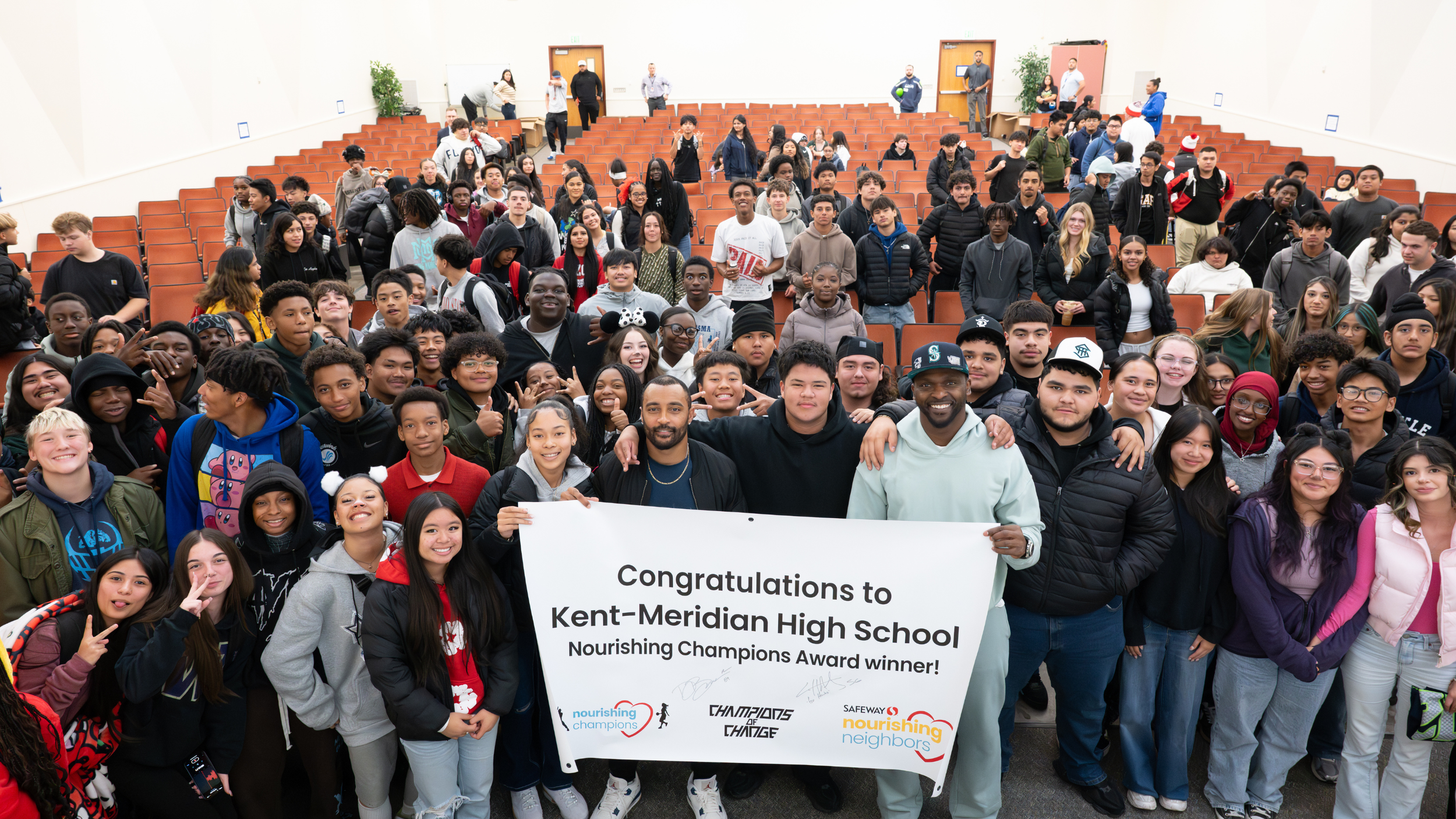
Congratulations to our ‘25- ‘26 Awarded Schools!
Wapato High School
Toppenish High School
Soap Lake Middle/High School
Squalicum High School
Bethel High School
Kent-Meridian High School
Evergreen High School
Oakville Middle High School
Northport School District
Washtucna School District
Fort Vancouver High School
Wilber-Creston High School
Neah Bay High School
Othello High School
John R. Rogers High School
South Bend Jr/Sr High School
Bremerton High School
Republic Middle High School
La Conner Middle-High School
Foster High School
Naches Valley High School
Colville High School
Raymond School District
Zillah High School
Centralia High School
Riverview High School
Auburn Riverside High School
Clallam Bay School
Granger High School
Lind-Ritzville High School